Yes, you can do this
I've been teaching movement for over 20 years now: dance studios in South Africa, private clients in Riyadh and Doha, and now Pilates and Barre here in Da Nang. No matter where I've taught, the question I get asked most before someone's first class is always some version of, "Am I going to be able to do this?"
Short answer: yes. Pilates isn't about being flexible or strong before you walk in the door. It's about learning to move well, and that's something anyone can start on day one.
You don't need to be fit, flexible or experienced to start Pilates. You just need to show up. Everything else is built from there.
Why Pilates is having a moment in Da Nang
Da Nang's expat and local wellness scene has grown fast over the last couple of years, and Pilates has become one of the most requested classes I teach, both at DỪA Women's Private Yoga Studio here in the city and at Hoi An Pilates just down the coast. Part of it is the lifestyle here. A lot of my clients are digital nomads and remote workers sitting at laptops for hours, or retirees looking for something gentler than a gym circuit but more structured than a walk on the beach.
Pilates fills that gap. It builds core strength and postural control without hammering your joints, which matters a lot in a hot, humid climate where a lower-impact workout is genuinely more sustainable long term.
What actually happens in a beginner class
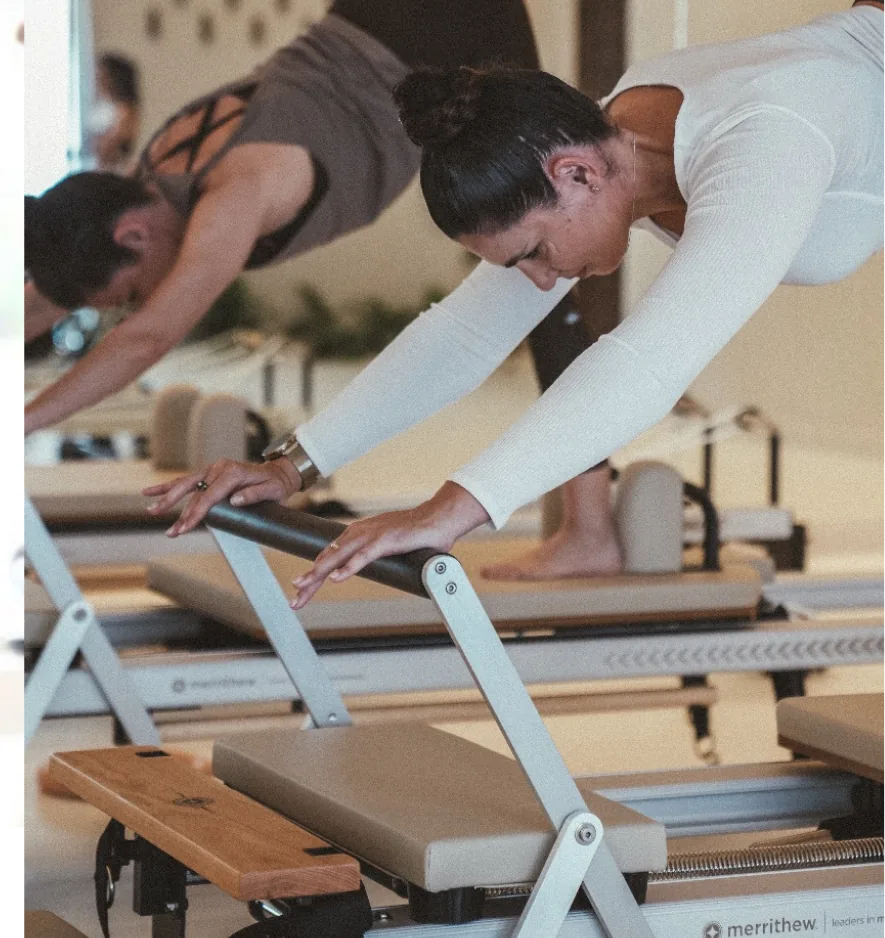
If you've never done Pilates, here's the honest rundown. A typical class starts with breathing and pelvic alignment work. It sounds basic, but it's the foundation everything else sits on. From there we move through a sequence of controlled exercises, either on a mat or on apparatus like the reformer, depending on the studio and class type.
You'll hear a lot of cueing around "neutral spine," "engage your core" and "control the movement." That's not me being fussy. Pilates is a quality over quantity practice. Ten slow, controlled repetitions done properly will do more for you than thirty rushed ones. It's genuinely one of the biggest mindset shifts for new students: this isn't about how many reps you can grind out, it's about how precisely you can move.
Expect to feel muscles you didn't know you had, particularly through your deep core and stabiliser muscles. You probably won't be drenched in sweat the way you might be after a HIIT class, but give it 24 to 48 hours and you'll feel it.
The mistakes I see beginners make
After two decades of teaching, the same handful of habits show up again and again.
- Holding their breath. People concentrate so hard on the movement that they forget to breathe through it. Breath isn't optional in Pilates, it's part of the exercise.
- Using momentum instead of control. Swinging a leg or jerking through a movement to "get it done" defeats the purpose. Slower is almost always more effective here.
- Comparing themselves to the person next to them. Everyone's body, spine and starting point are different. I'd genuinely rather you do a smaller range of motion with good form than a bigger range with your alignment falling apart.
- Skipping the fundamentals class. If a studio offers a beginner or foundations class, take it. It'll save you months of playing catch-up in mixed-level classes.
What to bring and wear
Grip socks are worth investing in if you plan to make this a regular thing. Most reformer studios require them anyway for hygiene and safety. Wear something fitted enough that your instructor can actually see your alignment, since baggy clothing makes it hard for us to correct you. Bring water, and if you're coming straight from the heat outside, give yourself a few minutes to cool down before class starts. Your first few breathing exercises will be a lot more effective with a settled heart rate.
The benefits you'll notice over time
The physical benefits are what people usually come for: better posture, a stronger core, less lower back discomfort from desk work, improved balance. But the benefit that keeps people coming back is usually something quieter, body awareness. After a few months of consistent practice, clients tell me they notice how they're sitting, standing and moving throughout their whole day, not just in class. That carryover into daily life is, to me, the real win.
How often should you practice?
For beginners, I usually recommend two classes a week to start building the neuromuscular patterns without overwhelming your body. Once those patterns feel more natural, usually somewhere around the six to eight week mark, you can adjust frequency based on your goals, whether that's general fitness, injury rehab or something more performance-focused like dance conditioning.